
Sauna: What Heat Sets in Motion
You are sitting on a wooden bench, barely moving, yet your heart rate rises. In a sauna, your body has heat to shed: more blood flows through the skin, the heart pumps more blood and sweat evaporates from the surface. This response to heat is part of what makes sauna interesting to the biohacking community. Alongside the cardiovascular response, another part of the story happens at a much smaller scale: the cellular stress response and its heat shock proteins. 12
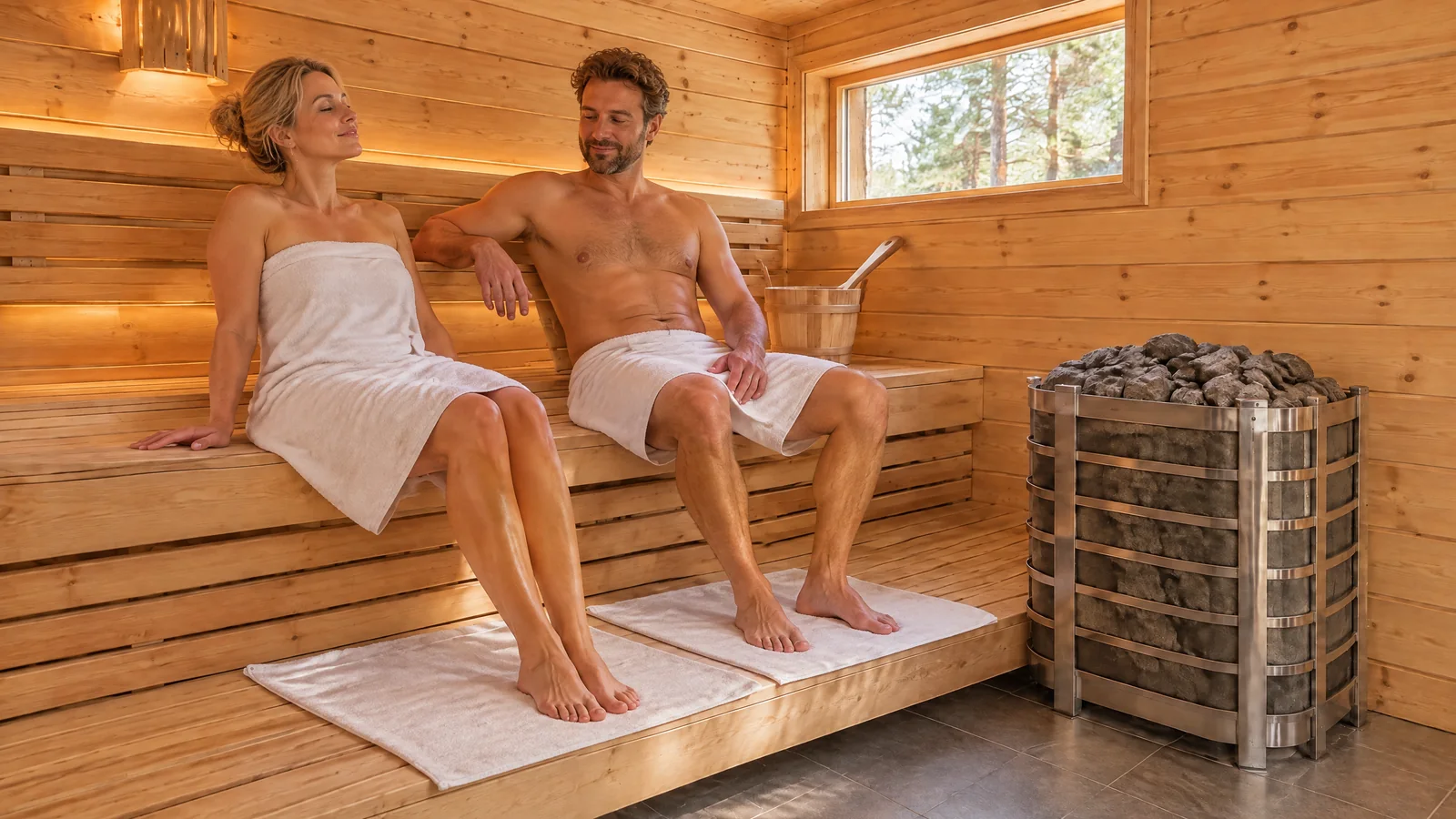
Why Sitting Still Can Raise Your Heart Rate
On a walk, working muscles produce much of the extra heat. In a sauna, heat also comes from your surroundings. One response is to increase blood flow through the skin, carrying more warmth from inside the body to its surface. Heart rate usually rises as well. 1
Sweat has a specific job in this process. As it evaporates, heat is lost. Humid air makes evaporation harder. The temperature on the cabin wall therefore tells only part of the story: humidity and time spent inside also shape the heat load. Pouring water over hot stones changes the conditions even when the thermometer barely moves. 1
That helps explain why a raised sauna heart rate is different from a raised cycling heart rate. Exercise also involves muscular work and the energy needed to sustain it. Heart rate alone is therefore a poor basis for converting a sauna session into exercise minutes or calories burned. 13
For the different goals behind lifting, see Strength, muscle size and power: what are you training?.
Heat Shock Proteins and Cellular Stress
A protein’s three-dimensional shape is part of how it does its job. When stress alters that shape, cells need ways to deal with the result. The heat stress response includes proteins involved in refolding altered proteins and clearing damaged ones. These are among the roles associated with heat shock proteins, often shortened to HSPs. 2
The useful idea here is that heat affects more than how your skin feels. It can also change the conditions in which cellular proteins operate. This stress response helps explain scientific interest in heat and ageing. 12
The actual measurement matters. In a 2017 study, 14 men completed both moderate cycling and warm-water immersion. HSP70 measured outside cells in the blood rose after both conditions. The immersion lasted 60 minutes in water at 40 °C. Those details describe the experiment, not a suggested sauna session. The participants were in water, and the researchers measured a particular blood marker rather than protein maintenance throughout the body. 3
Finnish and Infrared Saunas Deliver Heat Differently
Finnish Sauna: Hot Air and Heated Surfaces
A traditional Finnish sauna combines hot air with heat from the cabin surfaces and stove. Water poured over hot stones temporarily raises humidity. The shift between drier air and a burst of steam is therefore one of the variations within this sauna type. 1
When choosing a session, look beyond the name of the cabin. Ask whether it includes an aufguss, where water is poured over hot stones, and make sure you can leave whenever you need to. Waiting for an aufguss to finish is not a reason to stay if you feel unwell. 7
Infrared Cabin: Radiant Heat at a Lower Air Temperature
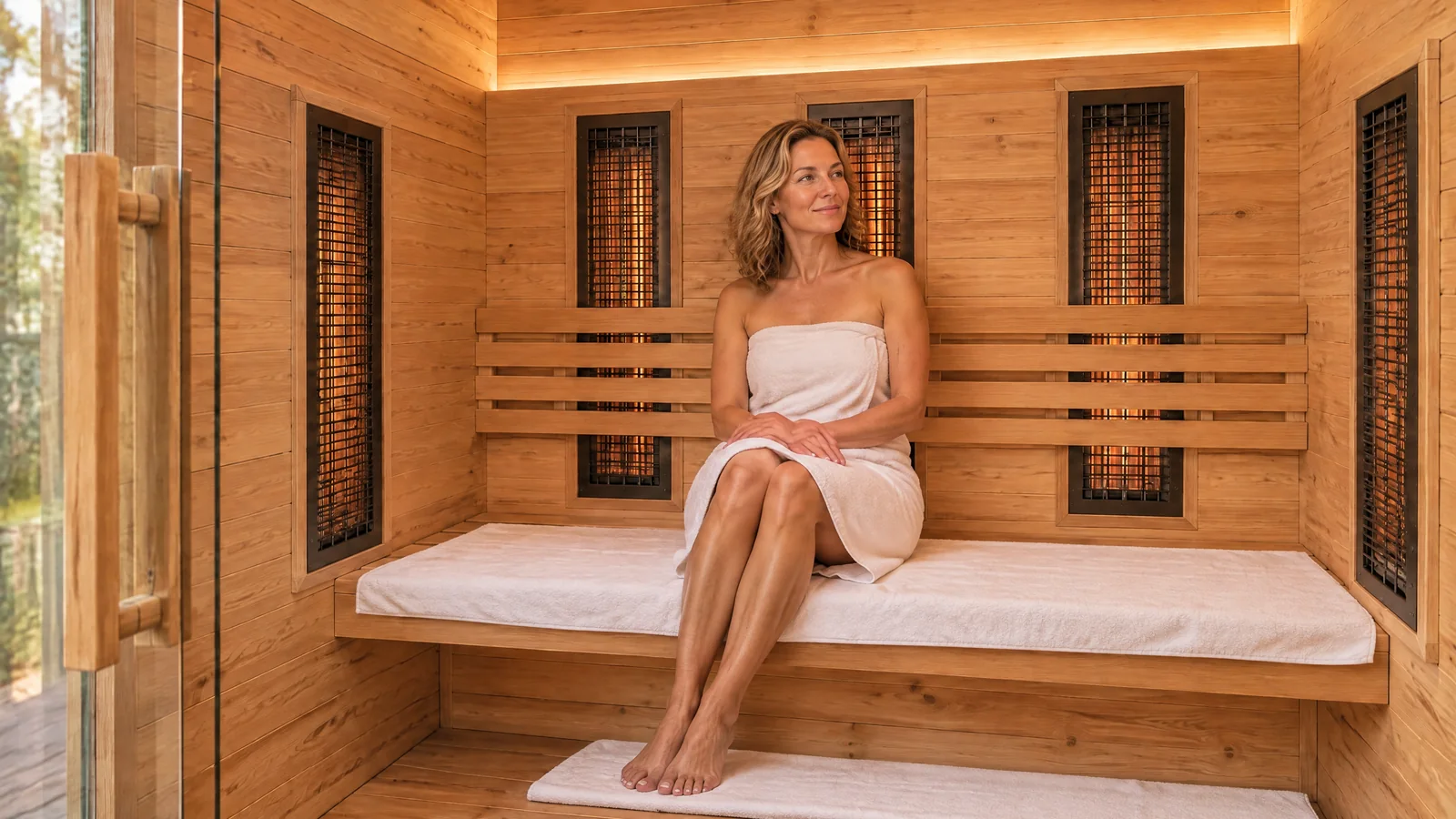
Infrared cabins use emitters and typically operate at a lower air temperature than Finnish saunas. A lower reading does not, by itself, describe the full heat load or show a greater benefit. Emitter arrangement, distance and session length are parts of the particular setup. 14
A small 2025 study illustrates how uneven heating can be. In ten adults, a single far-infrared session raised measured muscle temperature, with a smaller rise at greater measurement depths. Intestinal temperature did not change under those conditions. This describes that cabin and session, rather than every infrared device. 4
A warm bath is another environment again. Water transfers heat differently from air. When reading a claim about sauna, a useful first question is whether the researchers studied people in a cabin or immersed in warm water. 13
Leave Room for Breaks
The practical framework is simpler than many biohacking schedules: arrive prepared and leave if you feel unwell. Allow time to cool down gradually and rest afterward.
- Beforehand: Shower and dry off. Drinking enough before and after the visit is part of the routine. Leave alcohol out. 57
- Inside: Choose a duration you tolerate comfortably. The municipal sauna operator in Ratingen, Germany, recommends limiting a first round to no more than eight to twelve minutes. This visitor guidance is an upper limit, not a target to endure. Leave sooner if you feel unwell. 7
- Afterward: Cool down gradually, drink water and take time to rest. Another round is an option rather than an obligation. 67
Skip sauna when you are acutely ill. If you have a cardiovascular condition or are unsure whether sauna is suitable for you, speak to a clinician beforehand. Unstable angina, a recent heart attack and severe aortic stenosis are specifically listed as contraindications in the medical literature. Alcohol increases risks including a fall in blood pressure and abnormal heart rhythms. 56
Keep Track of Sauna Days
If sauna is a recurring appointment you enjoy, a simple calendar mark may be all you need to keep an overview. The 8 Protocol+ has an optional sauna tracker for this: tap the weekdays you visited. It is off by default and has no target or rating. It records your sauna days, rather than measuring your heat exposure. 8
View The 8 Protocol on the App Store
For a look at the structure of a whole day, Bryan Johnson: how he organises his Blueprint day explores how he connects regular habits.
What to Take Away from the Research
The immediate thermal and cardiovascular responses are well described, as are cellular mechanisms involved in heat stress. Small experiments also show why the heat source and the marker being measured matter. The longer-term health implications and appropriate frequency of different sauna types remain subjects for research. 1234
These findings do not establish a sauna schedule for a longer life. A visit you tolerate comfortably, with time for breaks, is a more useful starting point than chasing ever-higher temperatures. This general guide cannot replace a clinical assessment of whether sauna is suitable for you.
Sources
- Hussain J, Cohen M. Clinical Effects of Regular Dry Sauna Bathing: A Systematic Review. 2018. DOI: 10.1155/2018/1857413.
- Riezman H. Why do cells require heat shock proteins to survive heat stress?. 2004. DOI: 10.4161/cc.3.1.625. Review of cellular mechanisms.
- Faulkner SH et al. The effect of passive heating on heat shock protein 70 and interleukin-6. 2017. DOI: 10.1080/23328940.2017.1288688.
- Reed EL et al. Muscle temperature increases during a single far infrared sauna session without changes in intestinal temperature. 2025. DOI: 10.1152/japplphysiol.00067.2025. The funding corrigendum adds funding information.
- Hannuksela ML, Ellahham S. Benefits and risks of sauna bathing. 2001. DOI: 10.1016/S0002-9343(00)00671-9. Contraindications and alcohol-related risks.
- Harvard Health Publishing. Sauna Health Benefits: Are saunas healthy or harmful?. May 14, 2020. General safety advice, accessed November 11, 2026.
- Stadtwerke Ratingen. Unser Sauna-Ratgeber. German municipal operator guidance on visits, duration and rest, accessed November 11, 2026.
- The 8 Protocol on the German App Store. Description of the optional Plus sauna tracker, accessed November 11, 2026.