
Rolled oats: types, preparation and nutrition
Rolled oats are oat groats that have been steamed and flattened into flakes. Also called old-fashioned oats, they keep some bite when cooked. Quick oats are rolled thinner and absorb liquid faster, giving porridge a softer texture. Both retain the bran, germ and endosperm of the edible grain, making them whole-grain foods.1
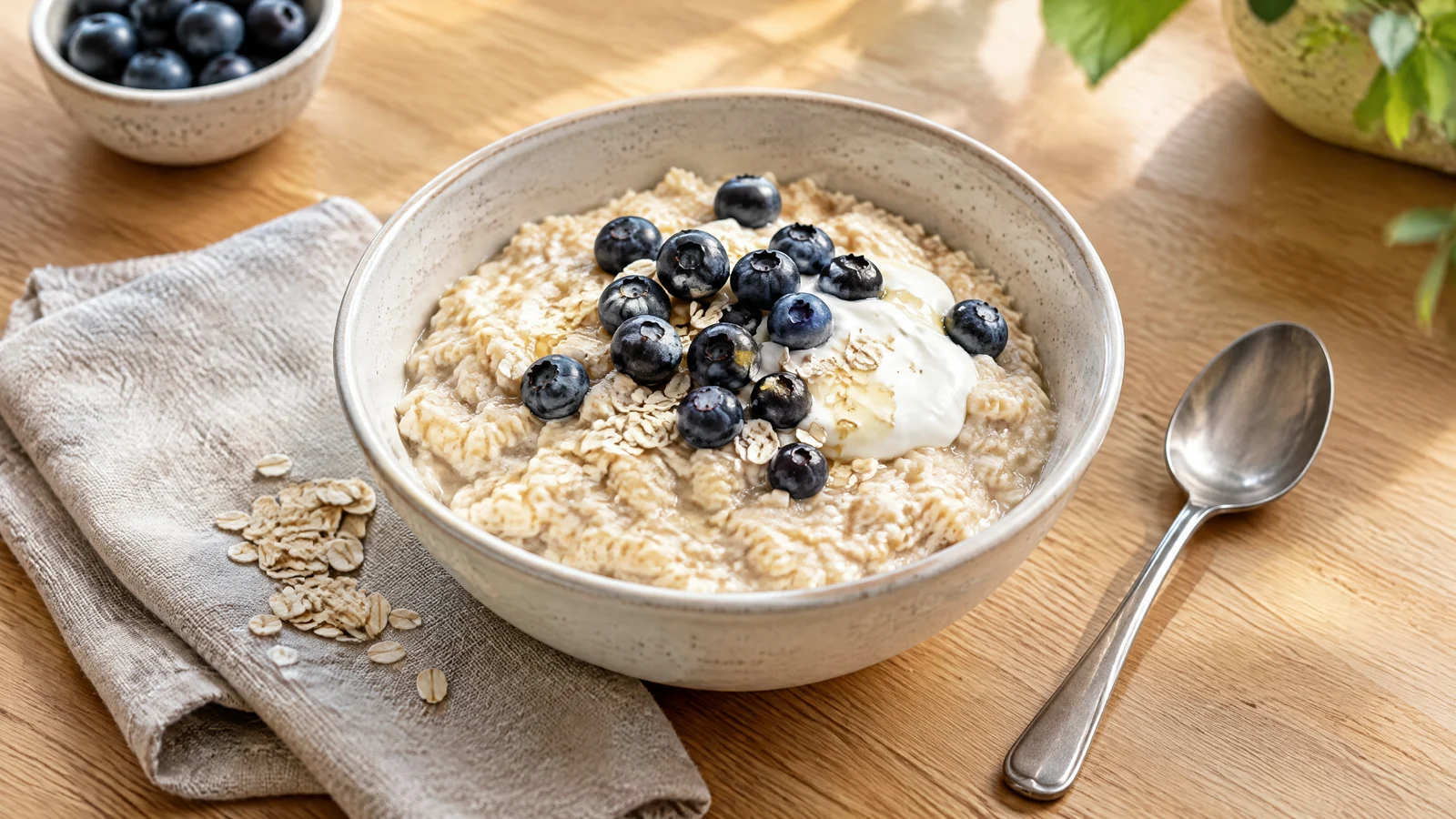
For breakfast, cook the flakes with liquid or soak them in the refrigerator overnight. Fruit, yogurt and nuts let you vary the flavor and composition of the meal. If a recipe calls for steel-cut oats, it means pieces of oat groats rather than rolled flakes, so the preparation differs.1
Why oats fit a longevity-focused eating pattern
Oats are one way to put the German Nutrition Society’s (DGE) recommendation to choose whole grains into practice at breakfast. They provide fiber, work with a range of ingredients and can be prepared ahead for workdays. Their place in longevity-focused eating is in that lasting pattern: regularly choosing whole grains and varying the plant foods you eat with them.8
Fiber: more than a number on the package
Oats contain different fibers with different properties.9 Dietary fiber: What makes the types different explains how solubility, viscosity and microbial breakdown relate.
The DGE gives at least 30 g fiber per day as a general guideline for adults in Germany. The 50 g of oats in our nutrition table supplies 5.1 g, roughly one sixth of that amount. The rest of the day’s meals count too. Fruit, pulses, other whole grains and nuts add more fiber and different ingredients to the day.9
Beta-glucan: the soluble fiber in oats
Beta-glucan is a soluble fiber that binds water to form a thick, or viscous, solution. This property matters in the digestive tract as well. The thickness of the intestinal contents depends partly on how much beta-glucan is present, how well it dissolves and the length of its molecular chains. Oat studies examine how these properties relate to nutrient absorption and cholesterol metabolism.45
The nutrition panel usually lists total fiber, of which beta-glucan is only one part. “10.2 g fiber” does not mean 10.2 g beta-glucan. Rolled oats, oat bran and isolated beta-glucan also have different properties, so check which ingredient a recipe actually calls for.
Build a complete meal around oats
The example portion provides 6.5 g of protein from the oats. For a protein-focused breakfast, you can add plain yogurt, skyr or a protein-rich soy alternative. Fruit and nuts bring different flavors and change the texture and composition. Choose amounts that suit the whole meal and your daily routine. The breakfast guide offers specific combinations.
If you want to add chia, Chia seeds: omega-3 and soaking explains the difference between ALA and EPA/DHA, as well as how the seeds swell. Do not swallow dry chia seeds on their own. Let them expand fully in sufficient liquid before eating and follow the pack instructions.
Hemp hearts can add another protein and fat ingredient to the oat base. Shelled hemp seeds: protein and fat explains their amino acids, fatty acids and differences from hemp seed oil and protein powder.
What rolled oats are, and what they are not
Rolled oats are made from oat groats that have had their inedible hulls removed and are processed with steps including steaming and rolling. Whole-grain flakes retain the components of the edible grain.1 When shopping, check the ingredients: a package of plain oats is different from a prepared breakfast mix containing sugar, dried fruit or nuts.
Rolled oats and old-fashioned oats refer to flattened flakes. Steel-cut oats are cut pieces of oat groats, not thicker rolled flakes. They generally take longer to cook, so do not swap them into a quick rolled-oat recipe without adjusting the preparation.
Oat bran contains a different fraction of the grain rather than whole flakes. Oat bran: fibre and beta-glucan explains the product variants and how to use them.
Which type fits your kitchen?
| You want … | A suitable option … | What to check |
|---|---|---|
| cereal with visible flakes and some bite | regular rolled or old-fashioned oats | liquid and standing time determine how soft they become |
| smooth hot porridge | thinner quick oats | stir while cooking and add liquid as needed |
| a fast mug or bowl preparation | a quick or instant product | follow its instructions and check whether other ingredients are included |
| breakfast without cooking in the morning | regular rolled oats prepared as overnight oats | mix in the evening and refrigerate overnight |
Thicker and thinner flakes give you different textures. A finely cut product is not necessarily sweetened, and a picture of chunky oats does not establish that a package contains only oats. Check the ingredient list to tell plain flakes from a mixture.
Basic hot porridge: adjust the texture to your taste
For a small trial bowl, use 50 g thin quick oats and 150 ml water, milk or a plant-based drink, plus a small saucepan and a spoon. These quantities are a kitchen example.
- Put the oats and liquid in the saucepan and heat while stirring.
- Simmer over low heat for about one to two minutes while stirring. Remove from the heat and leave to stand for three to four minutes. This method for thin flakes follows the approach in the Familienkost basic recipe. Follow your package if it specifies a different method.2
- If the porridge is too thick, stir in a little more liquid, a tablespoon at a time. If it is too thin, let it thicken while stirring.
- When the flakes are soft and the porridge is as creamy as you want, add fruit, yogurt or nuts if you would like them.
For a workday breakfast, you can prepare fruit and dry ingredients ahead. If you also want to prepare other meals, Meal prep for training days: cook and divide portions covers planning portions and chilling. Milk and plant-based drinks change flavor and nutrition differently. Choose according to your preferences and check the relevant package rather than treating them as the same ingredient in your diary.
Prepare it cold: overnight oats
For a cold version, mix, for example, 50 g regular rolled oats with 100 ml milk or a plant-based drink in a clean container with a lid. Refrigerate it straight away and leave it overnight. Harvard describes at least four hours in the refrigerator for this preparation method.1
In the morning, stir the oats and add a little liquid if you prefer a softer texture. A freshly chopped apple or some yogurt can go in too. Log these ingredients in addition to the oats if you are keeping a food diary. Keep the moist mixture refrigerated, even though the dry oats have different storage requirements.
Soaking softens the oats. You can also cook them for a warm breakfast. Choose the texture you enjoy and follow the package instructions.
What the nutrition information actually tells you
Oats contain carbohydrate, protein, fat and fiber. The quantities refer to the particular product. This worked example uses the information retrieved on October 31, 2026 for the German product “Haferflocken fein” sold by Mühle Schlingemann:3
| Item | 100 g dry flakes | 50 g dry flakes |
|---|---|---|
| Energy | 372 kcal | 186 kcal |
| Carbohydrate, German product page | 59.1 g | 29.55 g |
| Protein | 13.0 g | 6.5 g |
| Fat | 7.0 g | 3.5 g |
| Fiber | 10.2 g | 5.1 g |
The right column halves the figures on the retailer’s product page. The two decimal places for carbohydrate result from that calculation, not from measuring the food to that level of precision. Use the label on your own package for your portion. These German product figures are not a comparison with a US Nutrition Facts label.
Adding water to 50 g oats does not increase the amount of dry oats. If the finished porridge in this example weighs 200 g, the oats still contribute 186 kcal. Milk, plant-based drink and toppings are additional ingredients. Logging 200 g of dry oats instead would record four times the starting amount. The portion guide has more examples of dry versus prepared weights.
Buying and storing oats
- Read the ingredients: distinguish plain flakes from mixes and include the additional ingredients when comparing products.
- Check allergen information: if you need gluten-free products, look for the appropriate labeling. A picture of oats is not enough to establish that.6
- Store dry oats correctly: keep the opened package dry and closed according to the manufacturer’s instructions. Use a dry spoon.
- Refrigerate mixed oats: overnight oats belong in the refrigerator, not on your desk overnight. Follow the storage instructions for any perishable ingredients.
If you are planning meals beyond breakfast, Clean eating without rigid rules: shopping and recipes offers a shopping list organized by use and two warm base dishes.
Keep the bowl easy to follow in your diary
In The 8 Protocol, you can search for a matching oat entry or scan the barcode. Compare any result with your package and record the dry amount you actually used. If there is no suitable entry, you can use quick entry for the values you calculated. Add milk, yogurt, fruit or nuts with their own quantities. This keeps your basic mixture separate from the extras you change from day to day. Food logging is available without a subscription.7
View The 8 Protocol on the App Store. For a complete breakfast rather than a single ingredient, continue to the breakfast guide.
Frequently asked questions
Are rolled oats and porridge the same thing?
Rolled oats are an ingredient. Porridge here means the dish prepared with oats and liquid. A packaged porridge mix may contain additional ingredients.
Should I use water or milk?
Water lets the flavor of the oats stand out and adds no calories, carbohydrate, protein or fat. Milk or a plant-based drink changes flavor, texture and composition. Choose what fits your recipe and record the liquid you use.
Do oats have to soak overnight?
No. Overnight soaking is one preparation method for a soft, cold breakfast. You can also cook oats according to their package instructions or use them in cereal.
Why does my porridge become thicker after cooking?
The mixture continues to thicken as it stands. Stir in a little liquid until you like the texture again. Include any extra milk or plant-based drink in your entry if you are logging it.
How do I log cooked oats?
If you know the original dry amount, use the matching dry-oat entry and log the other ingredients separately. A generic prepared-porridge entry may use a different recipe or amount of water.
General nutrition and kitchen information, not individual medical advice. If you currently eat little fiber, increase it gradually and drink enough fluid. Tolerance varies from person to person.9
For a personal perspective, the daily routine also includes Nils’ regular mealtimes.
Sources
- Harvard Nutrition Source: Oats. Types and kitchen uses, retrieved October 31, 2026. Oat processing and type distinctions rechecked November 12, 2026.
- Familienkost: basic porridge recipe. Cooking and standing times for thin flakes, retrieved October 31, 2026.
- Mühle Schlingemann: Haferflocken fein. Retailer product values and storage information, retrieved October 31, 2026.
- Wolever et al., 2010. Original trial using specific beta-glucan cereals and different molecular weights; industry connections declared.
- Whitehead et al., 2014. Meta-analysis of 28 randomized trials; oat-industry funding and connections declared.
- EU Regulation 828/2014, Annex. Gluten-labeling requirements, retrieved October 31, 2026.
- The 8 Protocol on the App Store. Public feature description, checked October 31, 2026.
- DGE: Food-based dietary guidelines. Whole grains and varied food choices for healthy adults aged 18 to 65 in Germany. Retrieved October 31, 2026.
- DGE: Dietary fiber FAQ. Digestion, fermentation, variety and adult guideline; 2025 reference values. Retrieved October 31, 2026.