
Oat bran: fibre and beta-glucan
Oat bran can be stirred into breakfast or used in a savoury dish. It contains beta-glucan, a soluble fibre that binds water and affects how thick a mixture becomes. Bran comes mainly from the outer parts of the oat grain and has a different fibre composition from rolled oats. Plain bran flakes and crunchy bran mixtures also differ in ingredients, nutrition and texture, so check which type you are buying.123
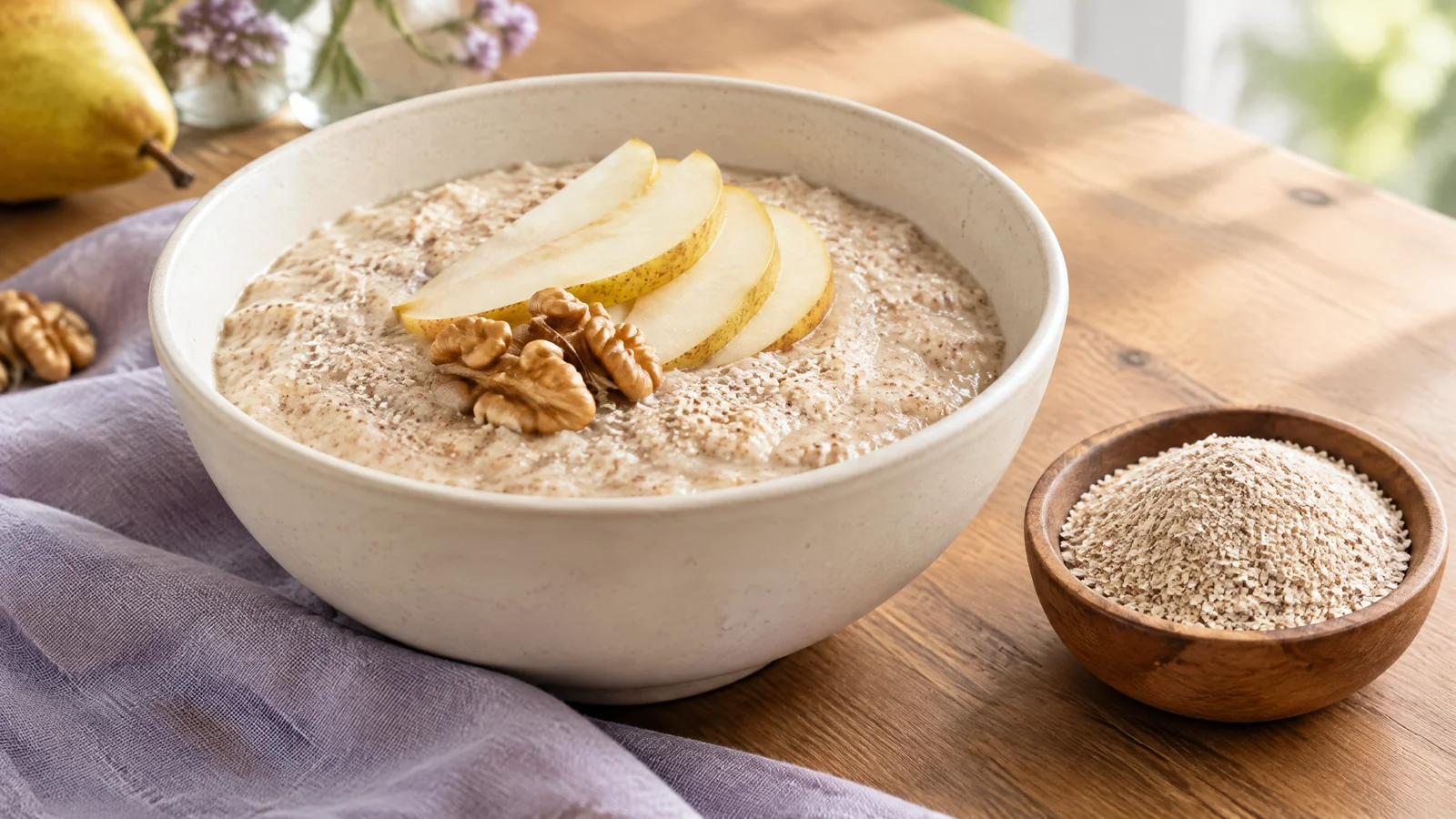
Bran and rolled oats use different parts of the grain
Rolled oats are made by flattening the dehulled grain. Bran comes mainly from particular parts of that grain: Kölln describes its Haferkleie Flocken as consisting mainly of the outer grain parts, including the outer layers and germ. Choosing bran instead of rolled oats therefore changes more than the coarseness of your breakfast.1
If you like the texture of rolled flakes at breakfast, Rolled oats: types, preparation and nutrition explains the options. The fine oat bran flakes in the product comparison can be stirred into liquid. Fleks are a crunchy bran-based mixture.
Beta-glucan: why its properties matter
Beta-glucan is a soluble fibre that binds water and can make a mixture thicker. The technical term for this thickness is viscosity. During digestion, its behaviour depends on more than the amount present. Solubility, molecular chain length and the surrounding food structure also matter, and processing and preparation can alter these properties.3
Controlled meal studies examine how blood glucose changes after eating foods containing beta-glucan. The food’s composition and processing also matter when interpreting the results.3
Total fibre includes more than beta-glucan. A separate beta-glucan figure refers only to that part of the fibre content. Consider the other ingredients and properties of the food as well, rather than choosing by the highest single number.
Dietary fiber: What makes the types different explains what soluble, viscous and fermentable each describe.
Two packets, two different ingredients
The following manufacturer declarations illustrate the difference using specific products. All figures are per 100 g of dry product, not a recommended serving. Manufacturer pages accessed on 2 November 2026.12
| Feature | Kölln Haferkleie Flocken | Kölln Haferkleie Fleks |
|---|---|---|
| Ingredients | 100% oat bran flakes | 70% oat bran, plus maize flour, dextrose, barley malt extract and salt |
| Fibre | 19 g | 13 g |
| Beta-glucan, separately declared by the manufacturer | 7.5 g | 6 g |
| Protein | 18 g | 15 g |
| Sugars | 2.0 g | 11 g |
| Use described by the manufacturer | Stir into warm or cold liquids | Crunchy topping for a bowl or salad |
Use the table to compare these two particular products. To understand the sugars figure, read it alongside the ingredients: the nutrition table gives total sugars, while the ingredients list identifies added dextrose. For another packet, use its own information.
A useful shopping approach is to consider your preferred texture, then the ingredients and nutrition table. Clean eating: shopping and recipes discusses food choices without rigid purity rules.
Using bran in a meal
The manufacturer says the flakes in the table can be stirred into warm or cold liquids, for example as part of breakfast or a savoury dish. Fleks add crunch instead. Swapping one for the other changes both the nutrition and the texture of your meal.12
Follow your packet and recipe for the amount of liquid and the preparation method. The flakes described here can be used with cold liquids according to their manufacturer. Check whether other varieties need cooking.
If you currently eat little fibre, increase it gradually and drink enough fluid. The German Nutrition Society recommends this approach because a rapid change can cause bloating or other digestive discomfort, and tolerance varies from person to person. There is no single bran quantity that follows from this guidance for everyone.4
If you document your meals, record the actual product and amount used. You can use The 8 Protocol food diary for this. A generic “oat bran” entry may not represent a mixture containing additional ingredients.
Separating gluten labelling from oat allergy
If you have coeliac disease, look for oats explicitly labelled gluten-free and discuss whether to include them, and in what amount, with a doctor or qualified dietitian. Oats can come into contact with other cereals during growing and processing. EU rules therefore set specific requirements for oats used in foods labelled gluten-free.56
An oat allergy is a separate issue: gluten-free labelling does not establish individual suitability for someone allergic to oats. Allergic reactions to oats are described in the scientific literature. With a known oat allergy, bran is therefore not an alternative to try independently.7
Read the full ingredient list and allergen information when shopping. The Fleks product in the table contains barley malt extract, for example. Its manufacturer also lists possible traces of tree nuts and milk.2
Takeaway: choose an ingredient for its properties
Choose the fine oat bran flakes described here if you want an ingredient to stir into food, or Fleks if you want crunch. Compare their ingredients and nutrition. Beta-glucan’s behaviour during digestion depends on its physical properties and processing as well as its amount. The meal studies described test short-term blood glucose patterns under particular conditions, not long-term health or lifespan. Oat bran is one ingredient within your overall diet.
This article explains a food and does not replace individual medical or dietary advice.
Sources
- Kölln: Haferkleie Flocken. Manufacturer declarations on composition, nutrition and use, accessed 2 November 2026.
- Kölln: Haferkleie Fleks. Manufacturer declarations on composition, nutrition and use, accessed 2 November 2026.
- EFSA NDA Panel: Oat beta-glucans and reduction of postprandial glucose peak. Scientific assessment, 2026; substance characterisation, mechanism and acute human studies.
- German Nutrition Society: Selected questions and answers on dietary fibre. German-language guidance, particularly on properties and tolerance, accessed 1 November 2026.
- Commission Implementing Regulation (EU) No 828/2014. Annex on gluten labelling and oats, 2014.
- NIDDK: Eating, Diet, & Nutrition for Celiac Disease. Government patient information, last reviewed October 2020.
- Thermo Fisher Scientific/Phadia: f7 Oat. Manufacturer-affiliated allergy reference, reviewed November 2020.