
My personal routine: how I organise my day
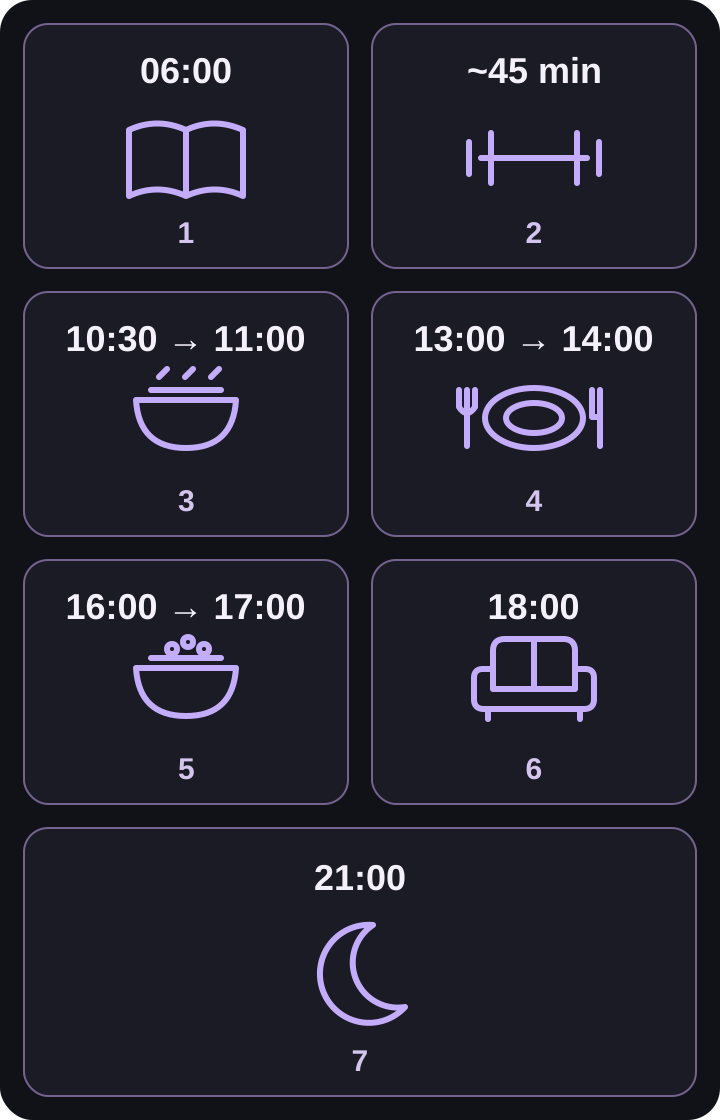
My day starts with reading at 6 am. On training days, I move on to kettlebells and rings before starting work. I also have three regular eating times. I usually finish work around 6 pm and go to bed around 9 pm, but how I spend the evening can vary.
I’m Nils, the developer of The 8 Protocol. Longevity is a topic I take a personal interest in. Here is a look at my everyday life: what I do, how I organise it and when I change the plan.
6 am: reading first, then training
I get up at 6 am every day and spend the first 30 to 45 minutes reading a book with Japanese sencha tea. On training days, I then train at home, shower and have a matcha before starting work.1
“Matcha: catechins, EGCG and longevity” explains the tea’s compounds and their connection to longevity research.
That keeps reading in my morning, before the first work tasks. I start the same way on days without training. Instead of the longer session, I usually do ten minutes of gentle stretching before starting work.
Training at home: two days, then usually a rest day
I’ve left the gym behind and train with kettlebells and rings. Usually, that means four to five sessions a week. A regular session takes about 45 minutes and has three parts:
- Warm-up: the start of the session.
- Main workout: that day's kettlebell or ring block.
- Mobility: the closing section with mobility exercises.
I usually train for two days, then take a rest day. Sometimes I do an extra ten-minute EMOM session on that third day instead: each round starts at the beginning of a minute, and the remaining time is rest. With that extra block, the third day is a training day rather than a full rest day.
I decide based on how I feel and also look at WHOOP’s recovery display. A device reading does not replace my own perception or professional assessment. I describe how I organise sessions, rest and extra blocks in my kettlebell and rings routine. My training volume isn’t a beginner’s plan either. If you’re just getting started, the kettlebell guide takes you through choosing a weight, learning exercises and planning a manageable first session.
Three eating times, fewer kitchen decisions
I don’t need much variety in my meals. Eating similar meals makes shopping easier, and I don’t have to decide from scratch what to prepare each day. I cook lunch fresh. By my own estimate, preparing all my meals takes no more than 30 minutes a day in total.
10:30 to 11 am: breakfast
Oats and oat bran with hemp and chia seeds, water, low-fat Greek yoghurt and blueberries. I also eat boiled eggs.
1 to 2 pm: lunch
My freshly cooked lunch is the second larger meal, with rice and chicken. On some days I swap the chicken for minced beef.
4 to 5 pm: the last snack
Another oat mixture with bran, hemp and chia seeds, plus yoghurt. If I go out for sushi in the evening, it replaces this snack.
That gives me two larger meals and a smaller snack at regular times, which fit my early start and bedtime. If you work different hours and train in the evening, another arrangement may suit you better. The guide to eating before a workout offers different time windows and ideas for meals.
I use The 8 Protocol to record my foods and meals. Even when I eat the same dishes, the amount I use can differ from a standard serving. The portion guide shows how to use the values on a packet for your own portion. The app’s core food diary is available without a subscription. Plus is optional.
I show the ingredients and usual amounts in my meals in “My meals: breakfast, lunch and a snack”. For oat types, hot and cold preparation, and the difference between dry and prepared amounts, the article “Rolled oats: types, preparation and nutrition” gives practical examples.
From 6 pm: evenings can be different
I usually finish work around 6 pm. Afterwards I see people, read, watch YouTube or rest. The time I finish is fairly regular, but how I spend the evening varies.
In the evening I use red lighting. When I use my iPhone, I wear blue-light-filtering glasses. I go to bed around 9 pm. Regular bedtimes and wake-up times matter to me. That leaves nine hours in bed before I get up. This is the time available in bed, not my measured sleep duration.
Sauna is also part of my life. I record my sauna days in The 8 Protocol. The sauna tracker is an optional Plus feature and is switched off by default.2
The devices and trackers I use
I use WHOOP for sleep tracking and its recovery display, and Eight Sleep mainly to control the temperature in bed. My Garmin fēnix Pro is mostly an everyday watch. During periods when I ride road or gravel bikes, I also use it to record those rides.
This is my personal routine, not a daily, eating or training plan for you. Your circumstances and commitments may differ. Devices, lighting choices and personal experiences do not replace individual medical or dietary advice.
What you can take into your own day
I read at a regular time, train before work and buy recurring ingredients. That’s how I organise my day. Whether any of it fits your own life depends on your schedule and commitments.
Find more personal accounts in My personal routine.
Sources and context
The daily schedule and my use of devices are my own personal account. As the developer of The 8 Protocol, I'm also describing my own app.
- EFSA: Caffeine. Sencha and matcha contain caffeine. All sources count towards the total. The amount depends in part on how much tea is used and how it is prepared.
- The 8 Protocol on the App Store. Public feature description, checked 31 October 2026.