
Meal prep for training days: cook, divide and keep track
Cook pasta, vegetables and tofu ahead of time and divide them into a few meals, so food is ready when you return from training. Start with a familiar dish. Before cooking, decide when and where you will eat each portion so you can arrange chilling, transport and reheating. If you keep a food diary, record the ingredients in your serving rather than the whole batch.
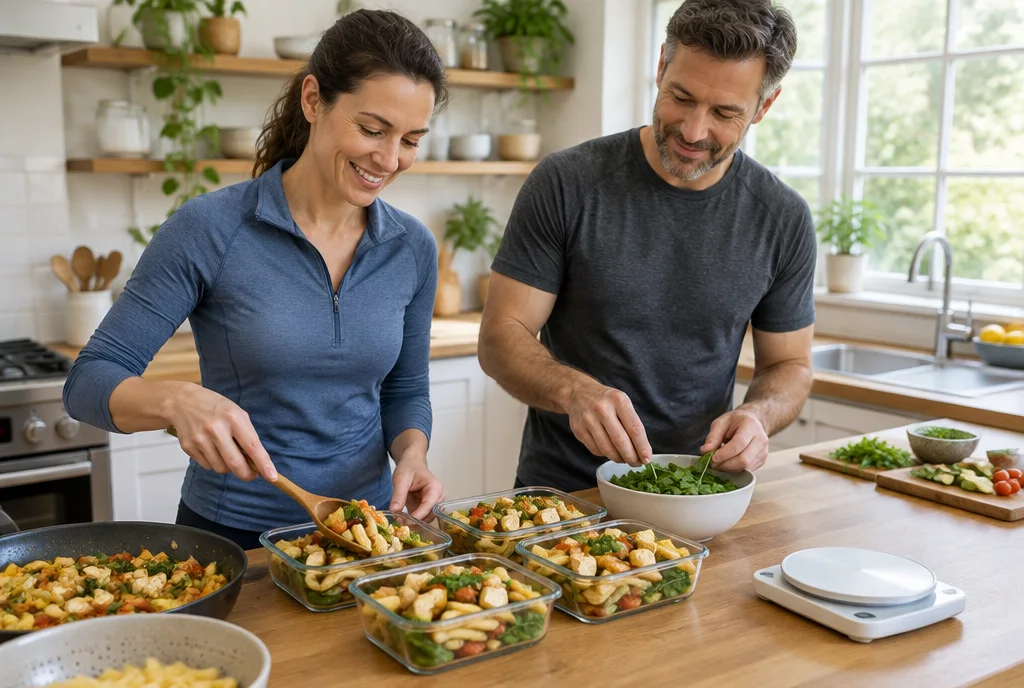
Work backwards from mealtime
Before shopping, find out whether there is a fridge at your destination and whether you can reheat the meal there. Decide which portions you will eat soon and which you will freeze. Germany’s Federal Institute for Risk Assessment, the BfR, recommends a cool bag for transport. A gym bag alone does not keep the food refrigerated.1
For a breakfast you can prepare ahead, see the cold option in Rolled oats: types, preparation and nutrition. The guide explains which ingredients can stay dry and which need refrigeration once mixed. For a skyr and oat bowl with an ingredient list and a worked portion calculation, see High-protein breakfast without powder: 3 simple options.
Choose something you enjoy and know how to cook, such as pasta with vegetables and tofu. Divide the components separately and pack dressing, nuts or an extra side on their own. That lets you vary the portions without making a different dish for each container.
For a work break alongside your prepared lunch, High-protein snacks for work: portions and storage has skyr, pumpkin seeds and crispbread with peanut butter. Choose an option that fits the storage available at work.
Size the portions to suit your appetite and the ingredients you want. You can add a side or use less pasta as you divide the food. For timing a meal before evening training, see what to eat before a workout. If you have not cooked ahead, try three quick high-protein dinners.
One cooking session, four boxes
For this four-portion kitchen example, you need a pot, a pan, kitchen scales and four clean food containers. The quantities below show how to divide a batch. Use containers with tight-fitting lids and check that the manufacturer approves them for the freezer or microwave use you have planned.
- 240 g dry wholegrain pasta
- 400 g plain tofu
- 600 g trimmed vegetables, such as broccoli and peppers
- 20 g oil
- Water, seasoning and salt to taste
- Prepare: Clean your hands, board, knife and work surface. Wash the vegetables under running drinking water, cut them and dice the tofu. Prepare raw salad first using clean utensils and keep it separate. Clean your hands and equipment thoroughly when moving between tasks.1 Weigh the pasta, tofu, vegetables and oil before cooking, marking the pasta weight as “dry”. Take nutrition values from the relevant product labels.
- Cook: Cook the pasta according to its packet instructions. Cook the tofu and vegetables in the pan, adding a little water if needed. Follow the products’ preparation instructions. For heated foods, the BfR specifies at least 70 °C for two minutes throughout.1
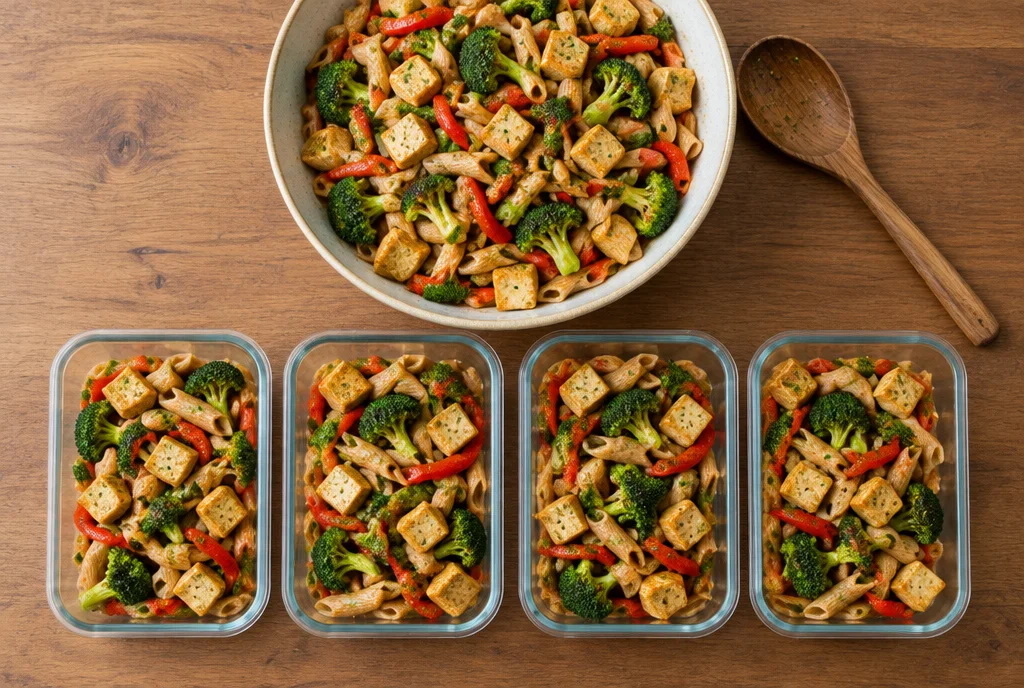
- Divide: Distribute each component evenly between the four containers. Each box then contains one quarter of every ingredient used. With separate components, you can weigh each cooked total and divide it by four individually.
- Chill and label: Transfer the food to shallow containers so it cools quickly, then refrigerate promptly. Label the boxes with their contents and preparation date. Freeze portions intended for later dates rather than keeping the entire working week’s food in the fridge.1
Divided evenly, each container represents one quarter of the ingredients used: 60 g of dry pasta, 100 g of tofu, 150 g of vegetables and 5 g of oil. These are ingredient shares, not the finished weight of the meal, because water is absorbed and other liquid is lost during cooking. Include any sauces or toppings you add as well.
In a soup with large pieces of meat, the ingredients do not necessarily divide evenly between servings. Beef shank soup: meat, broth and gelatin explains how to separate cooked meat from bones and broth, then share it between bowls. The soup’s total weight alone does not tell you how much meat is in each serving.
Work backwards from a weighed serving
If a dish is thoroughly mixed, calculate your serving as a share of its finished weight. Weigh the empty container beforehand and subtract it from the total.
Calculation example: Take a 300 g serving from a cooked, evenly mixed batch weighing 1,200 g, excluding the container. Dividing 300 by 1,200 gives one quarter, so assign one quarter of each original ingredient to your serving. The 1,200 g is an assumed figure for this calculation, not the expected yield of the cooking example above.
A 450 g serving from the same batch represents 37.5 percent. That calculation depends on an even mix of ingredients. If one container has much more tofu and another much more pasta, weigh the components separately instead. The guide to nutrition values and portions has more examples using dry and cooked weights.
What to record in your diary
When choosing a food entry, check the product, the amount its values refer to and whether it is raw or cooked. Enter the ingredients in your serving. For an evenly divided container in this example, that means one quarter of each ingredient rather than the full amount you bought.
The 8 Protocol lets you search for ingredients, scan packaged products or use quick entry for known values.2 First calculate the share you will eat. Then record either those ingredient amounts or that share of the nutrition totals. Use the same approach if one container is larger than the others.
If you add more oil, a different dressing or a larger side to one portion, adjust just those amounts. The photo estimate in optional Plus remains an estimate and does not replace known ingredients and weighed quantities.
For how chilling also changes part of the starch structure, see Resistant starch: What cooling changes, with a concrete rice example.
Chilling is part of the plan
Keep the containers in a fridge at no more than 7 °C, preferably 5 °C, as recommended by the BfR. Check the temperature where the food is stored. Eat heated meals within two to three days or freeze them. Meals with raw components should be eaten no later than the day after preparation. Ingredients, cooking and the actual chilling conditions all affect how long food remains suitable to eat.1
Thaw frozen portions in the fridge and reheat only what you need, evenly throughout. The BfR specifies over 70 °C for at least two minutes in every part. Reheating does not reliably make up for a long period without refrigeration. Normal smell and appearance alone do not establish that a meal is still suitable to eat.1
According to the BfR, preparing food several days ahead is less suitable for pregnant people, children under five, older adults and people with impaired immune defences. The original guidance includes additional advice on raw foods and freshly prepared salad.1
Check before taking a box with you
- The container shows its contents and preparation date.
- Chilling during transport and at your destination is arranged.
- The planned storage time fits the ingredients.
- Your diary entry describes your serving, not the entire batch.
- Separate oil, sauce and toppings are included if you want to record them.
Try one dish, then decide what to change after eating it. A different container might be more practical, the ingredients might need dividing differently, or another dish might reheat better. There is no need to start with a weekly menu of seven new recipes.
Frequently asked questions about meal prep
Do I need to cook for a whole week?
No. Start with a familiar dish and a few servings. For later mealtimes, freeze suitable portions after cooling rather than keeping every box in the fridge until the end of the week.1
Which containers work for meal prep?
Use clean food containers with tight-fitting closures. Look for the glass-and-fork food-contact symbol and separately check the manufacturer’s freezer and microwave instructions.1
Can I pack raw salad with the meal?
Keep raw components separate from cooked ingredients and dressing. The BfR advises eating meals with raw components no later than the day after preparation.1
How should I thaw frozen portions?
In the fridge, for example overnight. Then reheat the portion evenly: the BfR specifies over 70 °C for at least two minutes throughout.1
Sources
- German Federal Institute for Risk Assessment: preparing food several days ahead, German-language guidance dated 8 July 2025. Source for hygiene, transport, chilling, storage and reheating.
- The 8 Protocol on the US App Store, public feature description accessed on 23 October 2026.