
Shelled hemp seeds: protein and fat
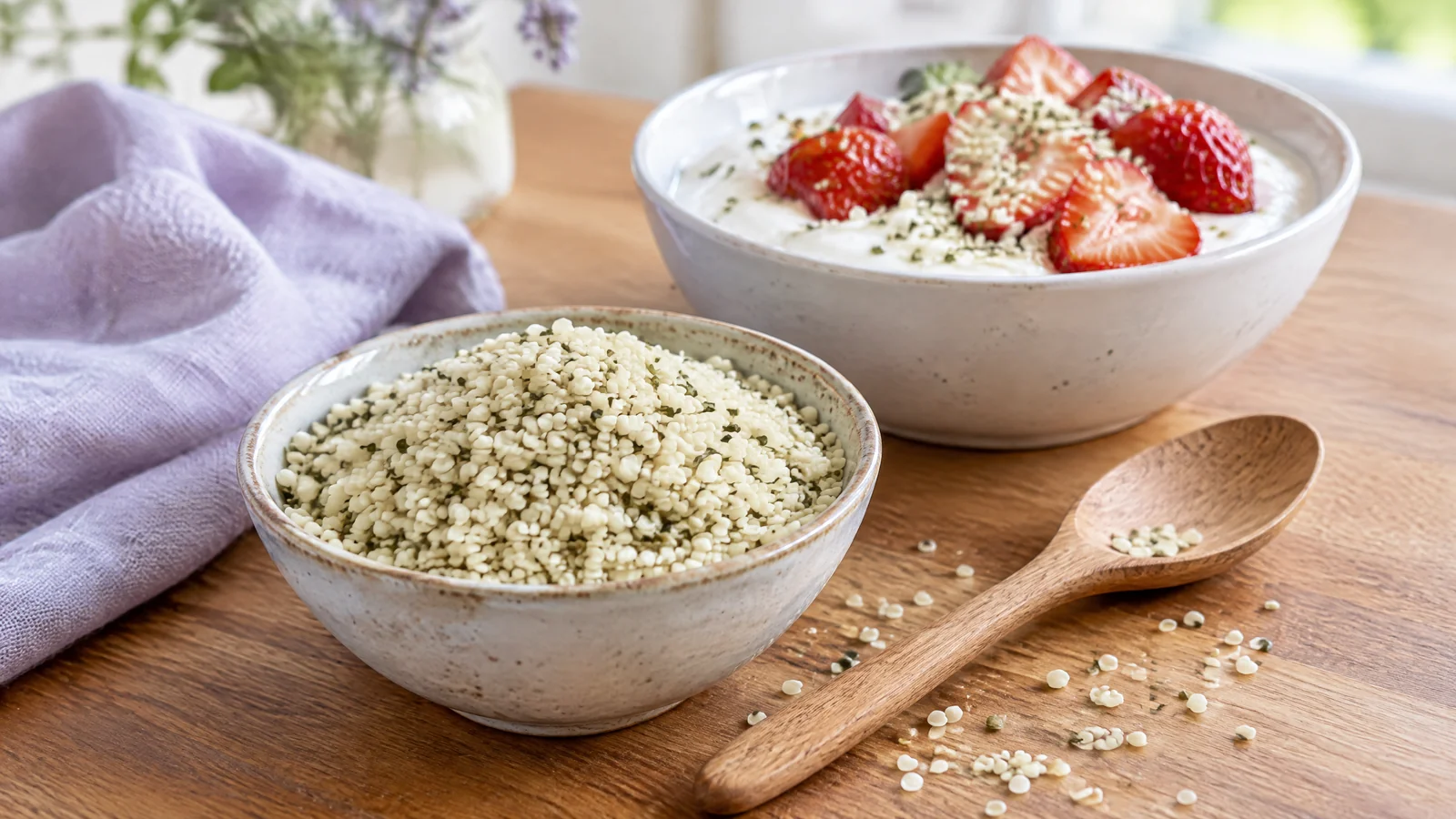
Hemp hearts add a soft texture and a mildly nutty flavor to muesli, yogurt or salad. They provide plant protein and fat, including polyunsaturated fatty acids. Hemp seed oil mainly provides fat and cannot replace the seeds as a protein source.1
Protein: why the amino acids matter
Protein consists of amino acids. Some must come from food and are called essential amino acids. A label’s protein figure gives the total amount, but assessing that protein also involves the proportions of its amino acids and how digestible it is.
Hemp protein contains lysine, an essential amino acid. In a study of different hemp products, lysine was present in the lowest proportion relative to the reference pattern used. This is the meaning of “first limiting amino acid”: it describes the balance within the product, not a personal deficiency in someone eating it.2
The study compared products including whole seeds, shelled seeds and seed meal. Its findings therefore need to be read with the particular product form in mind.
As a topping, hemp hearts contribute alongside the other ingredients in a meal. The protein total also depends on the yogurt, quark or plant-based alternative and how much of each you use. A small topping plays a different role from a larger main protein ingredient. Daily protein intake over 40: amounts and everyday meals explains how to consider protein foods across the day.
One product gives a sense of the amounts: Manitoba Harvest lists 10 g of protein, 15 g of fat and 180 kcal per 30 g of its Natural Hemp Hearts. The 30 g is the manufacturer’s reference serving, not a recommended portion for you. Use the label on your own package for other products.4
Fat: distinguish ALA from linoleic acid
Hemp seeds contain fatty acids from two different families: linoleic acid belongs to omega-6, while alpha-linolenic acid, or ALA, belongs to omega-3. Both are essential and must come from food. Their similar names refer to different molecules.3
ALA also differs from the long-chain omega-3 fatty acids EPA and DHA. The body can convert ALA into EPA and then DHA, but this pathway is limited. Amounts of ALA and amounts of EPA or DHA are therefore not interchangeable. A combined label claim such as “omega-3 and omega-6” does not, on its own, tell you how much of each fatty acid the product contains.
Compare the same fatty acid type and reference amount on each label. This lets you see which figures can meaningfully be compared. Hemp hearts add variety as an ingredient containing protein and fat. The presence of these fatty acids alone does not determine a suitable amount for you.
Shelled seeds, pressed products or oil?
Shelling removes the outer hull, while pressing separates oil from a solid material that can be processed further into foods such as seed meal. These processes turn the same seed into ingredients with different compositions: whole seeds, hemp hearts, hemp seed oil and protein products.1
- Whole seeds contain both the hull and the kernel.
- Shelled seeds, also called hemp hearts, are the kernels with the hull removed. They combine protein and fat in a solid ingredient.
- Hemp seed oil is the fat component. It does not take the seeds’ protein role in a meal.
- Seed meal and protein products come from further processing of seed material. Their composition depends on the production method, so use the specific product label.
Oil is therefore not a like-for-like replacement for a seed topping. Equally, a protein powder’s nutrition figures do not describe hemp hearts. A fair comparison needs the correct product type and the same reference weight, rather than just the shared word “hemp.”
Using hemp hearts in meals
Hemp hearts add a soft texture and a mildly nutty flavor to muesli, yogurt or salad. One manufacturer explicitly describes its product as ready to eat straight from the bag.4 Follow the use and storage instructions on your own package, including any preparation it calls for.
Add hemp hearts to oats for another protein and fat component alongside the other ingredients in your bowl. Find concrete breakfast ideas in High-protein breakfast without powder: 3 simple options and learn about the oat base in Rolled oats: types, preparation and nutrition.
Considering chia as well? Chia seeds: omega-3 and soaking explains what to consider about that ingredient and its preparation.
If you have a known food allergy, check the ingredient list and allergen warnings when choosing the product.
To record your meal in The 8 Protocol food diary, choose the entry for shelled hemp seeds and enter the amount you actually used. Hemp oil or protein powder entries describe different foods.
Food seeds are different from CBD products
Hemp seeds sold as food and CBD oils or cannabinoid extracts are different product groups. Cannabinoids occur particularly in other parts of the plant. Contact with those parts, for example during harvesting, can contaminate the seeds. Germany’s Federal Institute for Risk Assessment describes this pathway explicitly.1
A food’s nutrition profile does not establish a batch’s cannabinoid content. EFSA’s assessment of Δ8-THC also distinguishes food groups and analytical limits. A result below a detection or quantification limit does not establish absolute absence.5 The word “shelled” alone is therefore not proof that a product is THC-free. A nutrition table cannot establish a safe serving size with respect to possible contamination.
Frequently asked questions
What does “shelled” mean for hemp seeds?
The outer hull has been removed, leaving the kernel. These kernels are commonly sold as hemp hearts. Whole and shelled seeds are different products, so consider their respective nutrition labels separately.
Can I eat hemp hearts straight from the bag?
Some hemp hearts are explicitly sold as ready to eat. Follow your own package’s instructions, since one manufacturer’s preparation guidance applies to its product rather than every brand.
Are hemp seeds and CBD oil the same thing?
No. This article concerns seeds sold as food, rather than cannabinoid extracts. Hemp seed oil and CBD oil are not synonymous either.
Is “all amino acids” enough to assess a protein?
That describes their presence, not their proportions or digestibility. The protein amount in the ingredient you actually eat and the rest of your diet also matter.
Conclusion: one ingredient, different building blocks
Hemp hearts bring a soft, nutty ingredient containing protein and fat to muesli, yogurt or salad. Two distinctions help when comparing foods: total protein does not describe the amino acid balance, and ALA is a different omega-3 form from EPA or DHA. The study assessed digestibility in a rat feeding trial. It did not measure how much protein a person absorbs from a particular meal. Choose the product form that suits your meal and use that food’s own label.
This article explains a food ingredient. Individual medical questions and personal suitability belong in professional advice.
Sources
- German Federal Institute for Risk Assessment: Questions and answers on health risks associated with hemp-containing food and feed (German). November 15, 2022. Amino acids, fatty acids, product groups and the contamination pathway.
- House et al.: Evaluating the quality of protein from hemp seed products through the use of the protein digestibility-corrected amino acid score method. 2010, DOI 10.1021/jf102636b. Product analyses, amino acids and experimental digestibility assessment, not a human intervention. Amino acid scoring used the FAO/WHO reference pattern for children aged two to five. Whole and shelled seeds were defatted before the rat feeding trial.
- NIH Office of Dietary Supplements: Omega-3 Fatty Acids, Health Professional Fact Sheet. Updated August 22, 2025. Fatty acid families, essential fatty acids and limited ALA conversion.
- Manitoba Harvest: Natural Hemp Hearts. Product description, accessed November 3, 2026. Ready-to-eat shelled seeds, flavor and use; manufacturer information applies to this product.
- EFSA CONTAM Panel: Derivation of a health-based guidance value for Δ8-tetrahydrocannabinol and its occurrence in food. 2025, DOI 10.2903/j.efsa.2025.9735. Food groups and analytical limits, not an individual serving-size calculation.