
Dietary fiber: What makes the types different
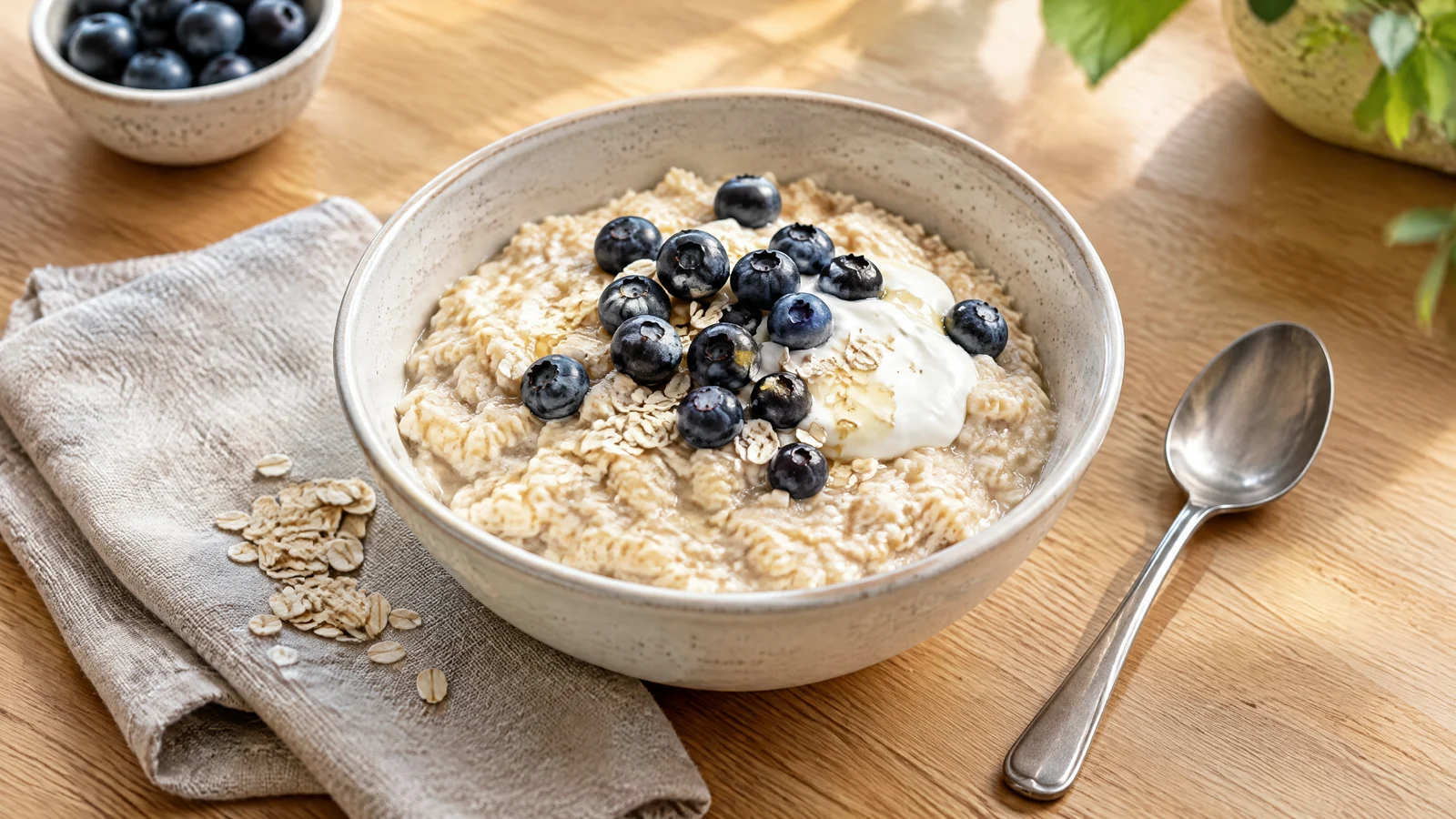
Oatmeal turns creamy as it absorbs liquid, while a slice of whole-grain bread keeps its firm texture. Both contain fiber, but that broad group of compounds does not behave in just one way. Solubility describes behavior in water, viscosity describes thickness, and fermentability describes breakdown by gut microorganisms. These properties are related, but they are not interchangeable. For anyone exploring nutrition and longevity, they offer a more useful starting point than looking for a single best product.1
What reaches the large intestine
Processing also matters for individual foods. Flaxseed: whole or ground? shows how the seed coat, preparation and daily amount fit together for this fiber-rich ingredient.
Our digestive enzymes break many carbohydrates into smaller building blocks. Fiber resists that breakdown, either fully or partly, in the small intestine. Some therefore reaches the large intestine, where microorganisms can break down different amounts depending on its structure.1
This explains two quite different aspects of fiber. Some components mainly shape the physical properties of the intestinal contents. Others are more readily used in microbial metabolism. A fiber’s structure and the way it is embedded in a food both matter.12
Soluble does not always mean gel-forming
A soluble substance can disperse in water without making a thick mixture. Viscosity describes how thick a fluid is. Certain fibers noticeably change that thickness. The length and arrangement of their molecular chains, processing and the surrounding conditions influence this property.1
Beta-glucan in oats is a useful example. It is a soluble fiber that can influence viscosity. The creamy texture of a whole bowl of oatmeal, however, comes from its ingredients and preparation working together. Texture does not measure beta-glucan content.2 Oat bran: fibre and beta-glucan explains the differences between bran and rolled oats.
Insoluble fibers are also part of many plant foods. This classification describes a property of a substance, rather than the nutritional value of an entire food. A total-fiber figure can include both soluble and insoluble fractions.2
Fermentable: What gut microorganisms do with fiber
Here, fermentation means microbial breakdown in the large intestine. It produces compounds including the short-chain fatty acids acetate, propionate and butyrate. These can serve as energy sources for the body, with butyrate particularly relevant to cells lining the large intestine. Fermentation also produces gases.12
The word “soluble” alone does not tell you how readily a fiber is fermented. Even soluble fibers vary considerably. It helps to keep three questions separate: How does it behave in water? Does it change the mixture’s thickness? How extensively do microorganisms break it down?
This exchange between food and the gut microbiota is one reason fiber interests longevity researchers. Resistant starch: What cooling changes explains how cooking followed by cooling can create a harder-to-digest starch fraction.
Bring different sources into your meals
You do not need separate shopping lists for soluble and insoluble fiber. Many foods contain a mixture. The German Nutrition Society, or DGE, lists whole grains, legumes, vegetables, fruit, nuts and seeds among dietary sources. Variety brings different foods, and therefore different fibers, to the table.1
Start with meals you already eat. A grain ingredient might provide fiber at breakfast, while a portion of lentils or whole-grain pasta can contribute to a cooked meal. Choose additions that suit the dish and your taste. There is no need to optimize every ingredient separately or add a fiber powder to make a start.
If oats are part of your breakfast, Rolled oats: types, preparation and nutrition looks at the ingredient itself.
How much, and how quickly should you change?
The DGE gives at least 30 g of fiber per day for adults as a general guideline. This is the German adult reference, not a prescribed amount for a single meal or a particular added-fiber product. DGE FAQ updated May 7, 2026.1
If you currently eat little fiber, increase it gradually and drink enough fluids. A sudden large increase can bring bloating, pain or unwanted changes in stools. Tolerance differs between people. Persistent symptoms or a medically prescribed diet call for professional guidance on the specific foods and amounts.1
To keep track of your food choices, you can record meals and the portions you use in the The 8 Protocol food diary. This gives you a record of what you actually eat.
What the distinctions tell you
Solubility, viscosity and fermentability describe different properties of fiber. In everyday meals, that leads to a straightforward approach: include varied sources that suit you, make changes gradually, and consider the overall amount alongside your own tolerance.
Sources
- German Nutrition Society (DGE): Selected questions and answers on dietary fiber (German). Updated May 7, 2026, accessed November 12, 2026. Definitions, properties, fermentation, food sources, the German adult guideline and gradual dietary changes.
- Max Rubner-Institut: Dietary fiber: Scientific assessment (German). June 2026, accessed November 12, 2026. Fiber groups, total-fiber composition and metabolic pathways.