Clean eating without rigid rules: make it work in everyday life
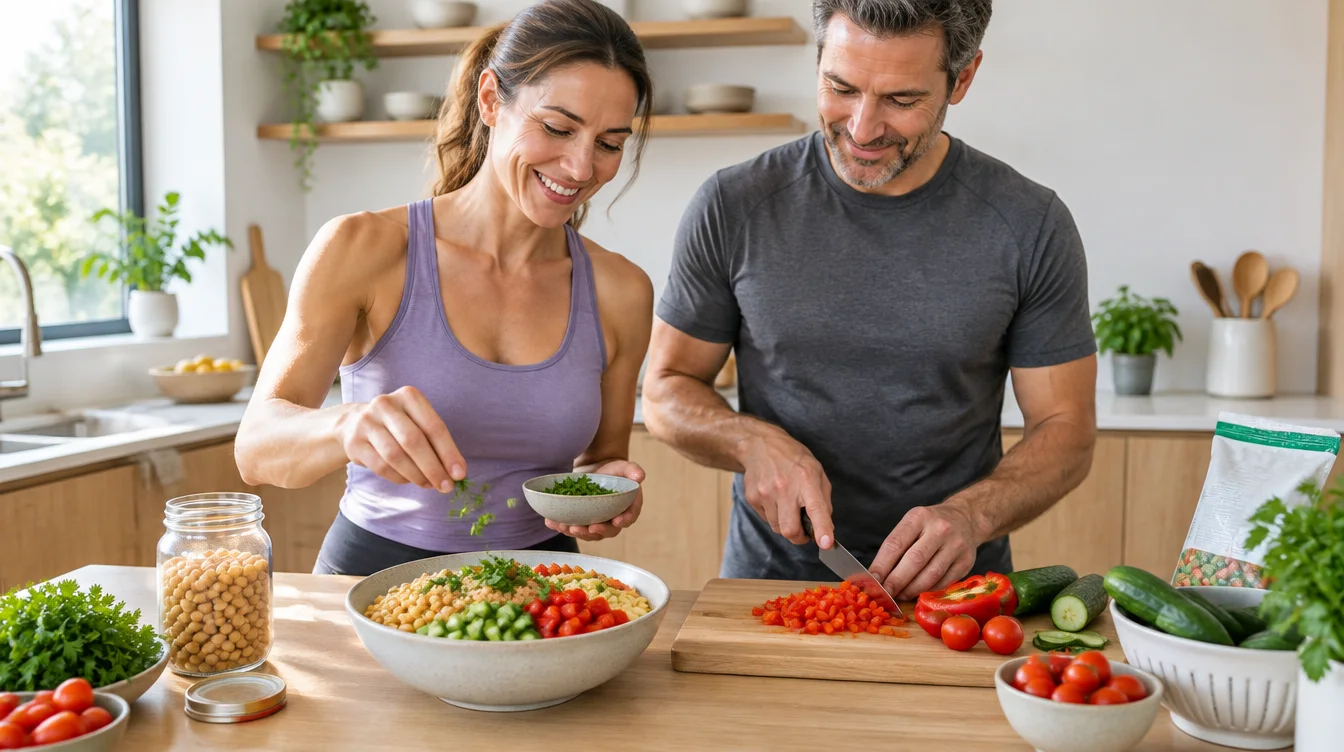
Want to cook more often without sorting every packet against another list of banned foods? Take the practical idea from clean eating: plan a simple meal with ingredients you enjoy and can actually use. Frozen vegetables, bread and canned chickpeas can help. You do not need a completely new cupboard or a perfect meal plan.
What does clean eating mean?
Clean eating usually describes eating less processed food and preparing meals at home more often. It is not one consistent meal plan. Some versions include yogurt and cheese; others exclude entire food groups. Harvard’s Nutrition Source describes these different interpretations and notes that the term is not federally regulated in the United States.1
There is no need to adopt a fixed number of meals, an eating window or a “cheat day” for this approach. Those extra rules do not answer the question of what to put on your plate today. If eating increasingly involves guilt, fear or compulsion, a stricter checklist is not the next step. Speak to a qualified support service or healthcare professional; a food diary is not a substitute for that support.
Why processed does not automatically mean unsuitable
Milling, freezing and pasteurizing are all forms of processing. Rolled oats, plain yogurt and frozen vegetables are not the opposite of “real food”. Harvard’s Nutrition Source distinguishes degrees of processing and explicitly describes frozen and canned ingredients as practical kitchen helpers.2
Three choices make shopping more concrete:
- Fresh or frozen vegetables? Choose the version you will actually use. Follow the cooking instructions for frozen products; not every product is intended to be eaten raw.
- Dried or canned pulses? Ready-cooked chickpeas are convenient for the meal below. Dried chickpeas are not a direct replacement: they need soaking and cooking according to their package instructions first.
- Ready-seasoned or combined at home? Look at the ingredients, taste and intended use. Compare nutrition values per 100 grams for similar products. The number of ingredients alone is not an adequate selection rule. An unfamiliar ingredient name is not, by itself, a verdict on a food.2
Organic, regional and seasonal can be shopping criteria of your own. They do not have to become extra entry requirements for your kitchen. Nor does a simple meal need an expensive powder or a product marketed as a “superfood”.
Shop for one specific meal
Choose one meal first rather than planning an entire week. A training day can be a reason to start, but it does not call for a special clean-eating plan. The term does not establish personal calorie or protein targets.
- Check what you have. Look in your cupboard, fridge and freezer for a base, vegetables and an addition such as cooked pulses. Decide what you want to use up first.
- Choose a dish. The example below uses couscous, cooked chickpeas, vegetables, oil, lemon and herbs. Write down only what is missing.
- Choose suitable packages. Check the preparation instructions and the amount you need. Here, chickpeas use drained weight and couscous uses dry weight. A large package is useful only if you can use the rest.
- Allow an alternative. If there is no fresh pepper, use other vegetables. Cook frozen vegetables separately according to their package instructions, then add them. A dish does not have to stay unchanged to qualify for a label.
Practical example: a couscous and chickpea bowl
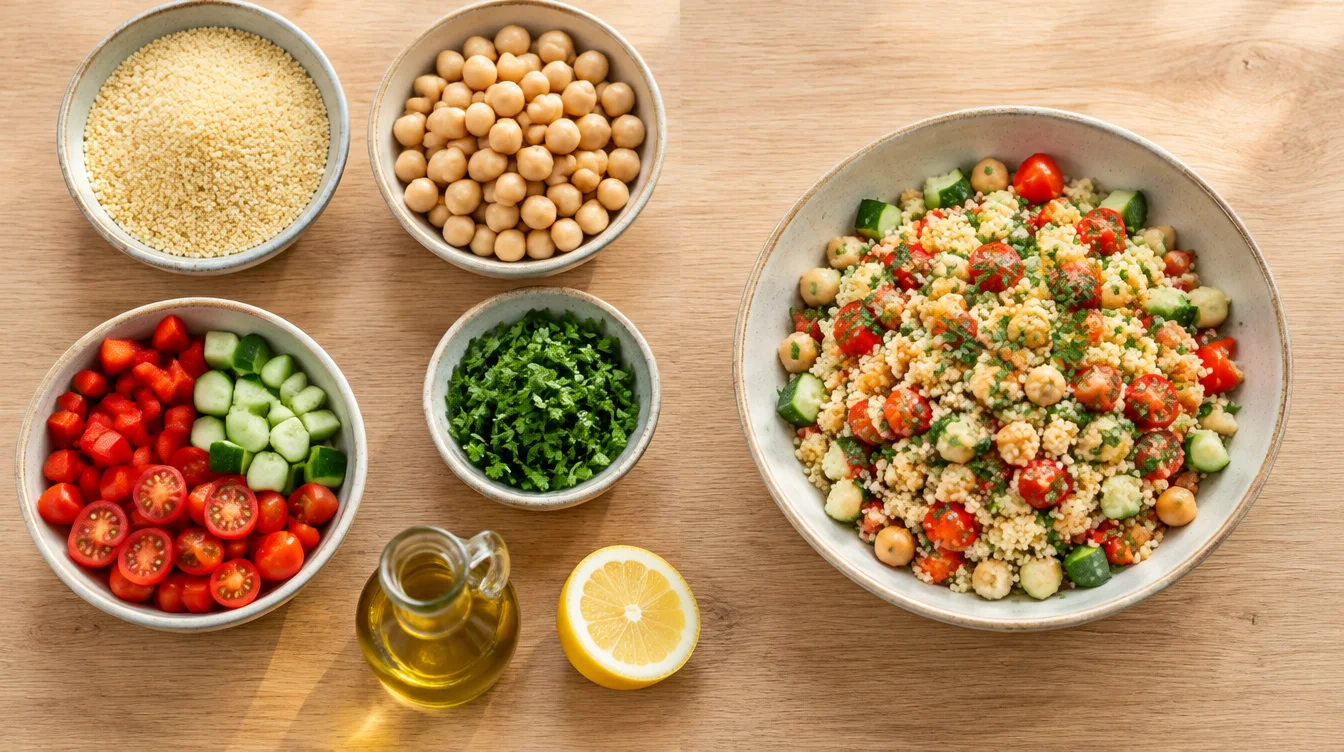
One dish to try
Ingredients and steps for two example servings
These quantities are an editorial cooking example for adults, not personal dietary advice or a prescribed serving size. Adjust the split and ingredients to your appetite, preferences and the number of people eating. Wheat couscous contains gluten; this example is not suitable for every intolerance or allergy.
- 120 g couscous, weighed dry, plus water according to the package instructions
- 240 g ready-cooked chickpeas, drained
- 300 g vegetables in total, such as pepper, cucumber and small tomatoes
- 2 tbsp olive oil
- 1 to 2 tbsp lemon juice, parsley, pepper and a little salt if needed
- Prepare the base. Prepare the couscous following your package instructions, using the amount of water specified there. Fluff it with a fork afterwards. Do not assume a universal soaking time or water ratio.
- Prepare the additions. Drain, rinse and drain the cooked chickpeas again. Wash and chop the vegetables and parsley. Also follow any use instructions on the products.
- Mix and season. Stir the oil with 1 tbsp lemon juice to start. Mix with the couscous, chickpeas and vegetables. Add herbs and seasoning, taste, then add more lemon juice if you prefer.
- Divide and eat. Divide between two bowls or adjust the split as needed. The result is a prepared meal, not proof that you have passed a dietary rule.
For a warm version, use vegetables cooked according to their package instructions instead of cucumber and tomatoes. If couscous does not suit you, choose another base and follow its own cooking instructions. Quantities, cooking time and water requirements are not universally interchangeable.
The example shows a combination, not apparently exact nutrition values. Without the specific products and quantities actually used, this guide cannot give a dependable calorie or macro figure. The ingredient picture is also an illustration, not a weighed recipe record.
Three pitfalls and a simpler alternative
Clearing out your whole cupboard: This mainly creates more shopping. First use what fits your planned dish. One packet does not determine the quality of your entire diet.
Looking only for recipes with very few ingredients: The five-ingredient rule appears in strict descriptions of clean eating, including VerbraucherFenster Hessen’s article. It is not our quality test. A dish with vegetables, pulses, grains, herbs and seasoning does not need to lose an ingredient simply to shorten its list.3
Treating a restaurant visit as breaking a rule: You do not need to plan the next meal as compensation. If you choose to keep a record, treat unknown quantities as estimates, not as a reason for more restrictions.
Your short final check
- Do I know which dish I will make with this shopping?
- Have I checked what is already available?
- Have I distinguished dry, cooked and drained quantities?
- Have I taken each package’s preparation instructions into account?
- Do I have a usable alternative if an ingredient is missing?
- Are taste, eating with others and my available resources still part of the decision?
If you want to record your meal
Record the ingredients you actually used rather than a label such as “clean”. In this example, couscous, chickpeas, vegetables and oil are more traceable than a generic entry for an unspecified bowl. The guide to nutrition values and portions explains reference amounts and preparation states.
The 8 Protocol is an iPhone food diary with food search and barcode entry. The diary and data export are available without a subscription. The app does not decide whether your food is “clean”. View The 8 Protocol on the App Store. Plus is optional; it is not required to start basic food recording.4
General information and a cooking example for adults. Not individual dietary or medical advice, and no promise of a health effect.
Sources and context
- Harvard Nutrition Source: Clean Eating. Different meanings and the limits of strict rules; last reviewed February 2022. Not a study testing this cooking example.
- Harvard Nutrition Source: Processed Foods and Health. Processing methods, practical uses of canned and frozen ingredients, and interpretation of ingredient lists; last reviewed August 2023. Health outcomes discussed there are not adopted as promises here.
- VerbraucherFenster Hessen: Clean Eating, February 2025, in German. Describes common rules and criticizes overly strict interpretations; it is not our meal plan.
- The 8 Protocol on the App Store. Source for the listed features, not an independent functional app test.
Sources read on 21 October 2026. Ingredient selection, quantities and preparation order are an original editorial example, not a scientifically tested clean-eating protocol.